With 6 different types of CNC milling machines available for machinists to choose from, it can be an overwhelming task to decide which one perfectly fits your needs.
A reason we will explore the main features of each CNC milling machine and their capability. Besides, you will also explore the advantage of each type of CNC milling machine.
As a machinist, this information will help you choose the perfect CNC milling equipment for any operation. Let’s dive right in:
What is a CNC Milling Machine?
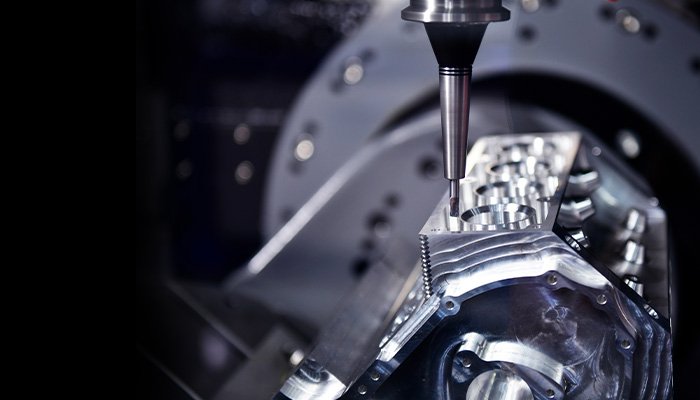
A CNC milling machine is an efficient device that allows you to cut, drill, and shape materials with computer-driven movements. You control it by writing the precise geometry and movement in G-code. The machine is programmed, and the cutting tool is moved in several directions to cut off material to block, or block, until it takes the shape of your design.
It can be applied to both easy and difficult pieces thus it is perfect in precision manufacturing of metal, plastic or wood components.
Different Types of CNC Milling Machines
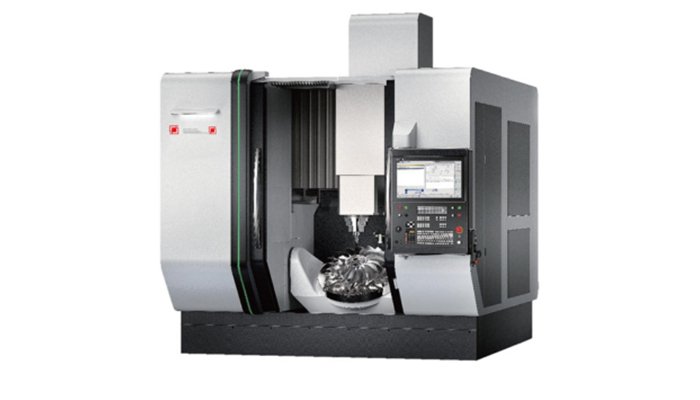
1. Vertical Machining Center (VMC)
A Vertical Machining Center (VMC) is a CNC machine tool with a vertically mounted spindle you are using. This arrangement enables the cutting tool to move vertically and the table supports your work piece horizontally. VMCs will particularly come in handy when you perform operations such as face milling, slotting, drilling and contouring.
The vertical arrangement provides you with very good visibility, which makes setting up and programming simple. It also does not take floor space, which is perfect in small shops. Depending on the model, you will be able to work on complex parts by programming 3, 4, or even 5 axes. VMC is commonly used in general manufacturing, mold-making, and prototyping due to its flexibility and lower price.
A VMC is your best bet in case you need to machine plane surfaces or handle high-speed jobs with a smaller footprint. You just need to keep in mind that chip evacuation is not that efficient as in horizontal machines.
Advantages
- Easier to program and operate for beginners.
- Ideal for flat or shallow parts like plates and molds.
- Smaller footprint fits tight workshop spaces.
- Lower cost compared to horizontal and 5-axis machines.
2. Horizontal Machining Center (HMC)
When your Horizontal Machining Center (HMC), you are working with a machine whose spindle is mounted horizontally. This orientation allows gravity to be used to your advantage- the chips will break off the workpiece, aid in cooling reducing wear. HMCs will suit complex or large-volume machining best or when you wish to utilize multi-sided workpieces or deep cavities.
The machine usually has a rotary table or pallet changer, where you can load one part and another is getting milled. This transforms your productivity drastically. The trap allows directing various fixtures and tools, facilitating continuous machining processes without interrupting. HMCs can commonly accommodate 4-axis machining, which allows you greater design flexibility and part orientation.
They occupy more space and are more expensive than VMCs, but you will achieve efficiency, accuracy, and minimal down time. An HMC is your best choice, especially when you need to machine large and sophisticated pieces in a very short time.
Advantages
- Superior chip evacuation improves surface finish and tool life.
- Ideal for machining on multiple sides with fewer setups.
- Better suited for heavier, bulkier parts.
- Increases productivity in high-volume production environments.
3. 3-Axis CNC Milling Machine
With a 3-axis CNC milling machine, you move in three planes: X (left to right), Y (front to back), and Z (up and down). You clamp your work on a table and the cutting tool travels in all three directions to model it. This arrangement allows you to carry out some of the basic operations such as drilling, slotting, contouring, and face milling.
It goes best with flat or block-like parts and is most ideal when you do not have to machine several sides on each set. It is in your advantage, as it is simple, cheap and universally compatible with material. It is limited in complex geometries but a best opening point to most machining applications.
A 3-axis CNC milling machine will accommodate your needs effectively and accurately, when it comes to straightforward and reliable performance. Multi-sided machining just requires that you simply re-orient your workpiece manually.
Advantages
- Simple design and programming for basic operations.
- Cost-effective solution for entry-level CNC machining.
- Ideal for 2D and basic 3D milling tasks.
- Easy maintenance and troubleshooting.
4. 4-Axis CNC Milling Machine
Once you have a 4-axis cnc milling machine, you have one more axis usually rotation about the x axis called the A-axis. This rotational movement enables you to rotate your workpiece as the tool machined the workpiece on different sides without manual rotation. Making intricate cuts, engraving and pocketing can be done without having to set up and repeat more than once.
When you make cylindrical structures, gears or other parts with complex side features, it saves you a lot of time. You place the part on a rotary table, and the machine commands of the movement on X, Y, and Z. This provides you with better accuracy and consistency, particularly with medium to high-volume production.
Should you want to minimize handling and increase productivity, transitioning to a 4-axis machine makes a lot of sense. You will still enjoy all the advantages of a 3-axis system yet have increased versatility in complex part geometries.
Advantages
- Adds rotational movement for machining on different sides.
- Allows more complex part geometries without manual repositioning.
- Reduces setup time and enhances part accuracy.
- Useful for creating gears and cylindrical parts.
5. 5-Axis CNC Milling Machine
By working with a 5-axis CNC milling machine, you work with one of the most powerful systems. In addition to the usual X, Y, and Z movements, you also control two rotational axes; usually A (around X) and B (around Y) or C (around Z). This enables the cutting tool or workpiece to tilt and rotate, and you can machine very complex parts in one setup.
You reduce repositioning, tool changeovers, and achieve cycle times slashes. This will be particularly helpful in aerospace, medical, and mold markets, where accuracy in precision and contours counts the most. Capable of machining undercuts, complex curves, and angles on multiple surfaces, your process is more efficient and adaptable.
Whereas a 5-axis machine is more program-intensive and can be more expensive, its enhanced productivity. Is your work very high precision and complex, then this is your machine.
Advantages
- Machines complex, curved, and contoured parts in one setup.
- Eliminates need for multiple fixtures or setups.
- Delivers highest accuracy and surface finish.
- Ideal for aerospace, medical, and high-precision industries.
6. Bed type of Milling Machine
By deciding on a bed-type milling machine, you will enjoy the sturdy and rigid construction which is suited to heavy-duty machining. As opposed to knee-type mills, the bed mill table only has longitudinal (X-axis) motion, with the head moving vertically (Z-axis) and laterally (Y-axis). This design will provide you more stability and carrying capacity, which is ideal when you need a large or heavy workpiece.
You will see reduced vibration and increased accuracy, particularly in deep cutting or heavy cutting. Bed mills also make aligning and setup easier and minimize downtime. Machine engine blocks and large molds, you will be pleased with the reliability and performance.
Bed-type machines are not best suited to an application that requires high-velocity or complex profile work, but are useful in shipbuilding. Assuming you are interested in strength, durability, and the machining of large pieces using precision, this machine will be a good investment.
Advantages
- Provides enhanced stability for heavy-duty cutting.
- Supports larger and longer workpieces.
- Easier access for tool changes and part setup.
- Durable for rough machining and industrial applications.
7. Gantry Milling Machine
By using a gantry milling machine, you still have a heavy-duty system that is geared towards working in large volumes and precision operations. The machine has a bridge-like gantry that traverses the work table to enable the cutting head to move in the X, Y, and Z axes. You are able to easily machine large workpieces like aerospace panels, ship parts, or industrial molds among another.
The spindle is moved up and down and the gantry horizontally, and the table can be fixed or moved longitudinally. This layout provides you with outstanding rigidity and precision across vast lengths. This will favor you with an extremely stable frame that minimizes vibration and carries concurrent multi-axis motion.
Automation and multiple head features are also sponsored by gantry mills, increasing productivity. When you have large pieces to deal with that require size and detail, you take control, precision, and power in one machine. That is where you serve best in industrial area machining applications.
Advantages
- Ideal for very large and heavy components.
- Exceptional structural rigidity for high-precision work.
- Supports multi-head configurations for simultaneous operations.
- Suitable for aerospace, mold-making, and shipbuilding.
8. Turret Milling Machine
A turret milling machine will provide you with flexibility and ease of use particularly on smaller and detailed work. The head of the machine is mounted on a rotating and adjustable turret that allows you to machine at different directions without rotating the work piece. You command the movement in the X, Y, and Z directions, which makes it applicable in general-purpose milling, slotting, and drilling.
It is an excellent option for working in a repair shop, toolroom, or in the small production field. Turret mills allow you to perform a variety of operations without setup changes, and they are simpler to work on and maintain than their bigger counterparts. They are not as rigid or automatized as bed-type or gantry mills, but you get maneuverability and a smaller footprint.
Advantages
- Offers flexible movement with a rotating turret head.
- Compact design fits small shops and toolrooms.
- Easy to operate for light-duty and prototyping work.
- Allows quick angle changes without re-fixturing.
9. CNC Knee Mill
With a CNC knee mill, you are working at a machine that integrates the conventional manual milling options with the utilization of the CNC automation. The distinguishing aspect is the vertically-adjustable knee (that supports the worktable) so that you can move same along the Z-axis. The vertical movement is manually or semi-automatically operated, and it still has precise CNC control over the X and Y axis positions.
This system is best suited to prototyping, custom components and is commonly found in classrooms. It allows fast height changes, moving the workpiece, and various functions such as drilling, facing, and pocketing. When switching to CNC milling, this machine offers a familiar experience of a manual mill with the accuracy of a digital control.
It cannot be used in heavy industrial tasks, but is ideal in small-batch or light-duty applications. You also enjoy flexibility, user-friendliness, and an affordable point of entry into CNC machining.
Advantages
- Combines manual and CNC operations for hybrid control.
- Good for one-off jobs and prototypes.
- Vertical knee movement offers added flexibility.
- Excellent for educational and repair environments.
10. Planetary Milling Machine
Planetary milling machine has various cutting tools spin on individual axes but also revolve around an off-center axis all at once. You are in a position to cut a series of surfaces or cavities simultaneously, reducing time drastically and enhancing uniformity. This kind of machine will frequently be used whenever you need precision and mass production.
Its construction offers low tool wear and symmetrical machining that provide you with enhanced surface finish and dimension accuracy. For projects involving concentric cutting or synchronized engagement of tools, this machine will not disappoint; the performance is unrivalled in this machine. Programming and setup will often be more complex, but benefits of efficiency and accuracy offset the learning curve.
When your various projects require multi-surface machining at high precision, the planetary milling machine offers an intelligent and scalable option.
Advantages
- Performs simultaneous multi-surface cutting operations.
- Ideal for symmetrical and high-precision machining.
- Increases efficiency for complex parts like gears or turbines.
- Minimizes tool wear and enhances surface finish.
11. Tracer-Controlled Milling Machine
A tracer-controlled milling machine is used when you duplicate a complex shape or contour by moving the cutter along. This is done with a tool called a stylus that traces a master template. You move the machine manually or hydraulically using a physical pattern and the machine copies the pattern on the workpiece.
You could use a tracer mill to machine molds, dies, or complex shapes that need to be copied now. It is particularly useful when one wishes to reverse engineer parts not having detailed CAD models. Tracer mills allow you to be more flexible when dealing with uneven surfaces.
You have the capability to replicate 3D profiles with a reasonable degree of accuracy and fewer strains towards digital programming. It is also used when working in our heritage shops or where the homologated parts have been sculpted.
Advantages
- Allows duplication of 3D profiles without CAD data.
- Useful for mold-making and reverse engineering.
- Operates without complex digital programming.
- Adaptable to sculpted or irregular shapes.
12. Double Column Milling Machine
When operating a double column milling machine, you depend on an ultra-solid and very precise machine with the machining of large workpieces. The gantry is supported by two columns, providing an outstanding structural stability and support capacity. It is easy to process large, broad, and thick parts like industrial dies, aircraft frames, or large auto molds.
It gives you complete control, and you typically have the option of additional attachments such as rotary tables or multi-axis heads to allow flexibility. The double column structure eliminates vibration and deflection, thus occurring even with aggressive cutting operations. This is the machine you should use when you require accuracy on large dimensions.
It aids in automation, multi tool configuration and high torque cutting. Though the machine is cumbersome and expensive, you offset it with excellent performance in heavy duty applications. Apply it when you need a synergy of size, stability, and precision that can be achieved on a single powerful milling platform.
Advantages
- Unmatched rigidity and stability for large part machining.
- Delivers high accuracy across long dimensions.
- Handles multiple operations in one clamping.
- Ideal for automotive dies, molds, and aerospace frames.
Conclusion
Your familiarity of the capabilities of each CNC milling machine helps you to increase productivity, minimise errors, and fulfil a complex design requirement. Choose the most effective type to ensure accuracy and work efficiency.
More resources:
Types of CNC Machines – Source: UTI
Introduction to CNC Milling – Source: UTI
What is CNC Milling – Source: LINCOLN TECH